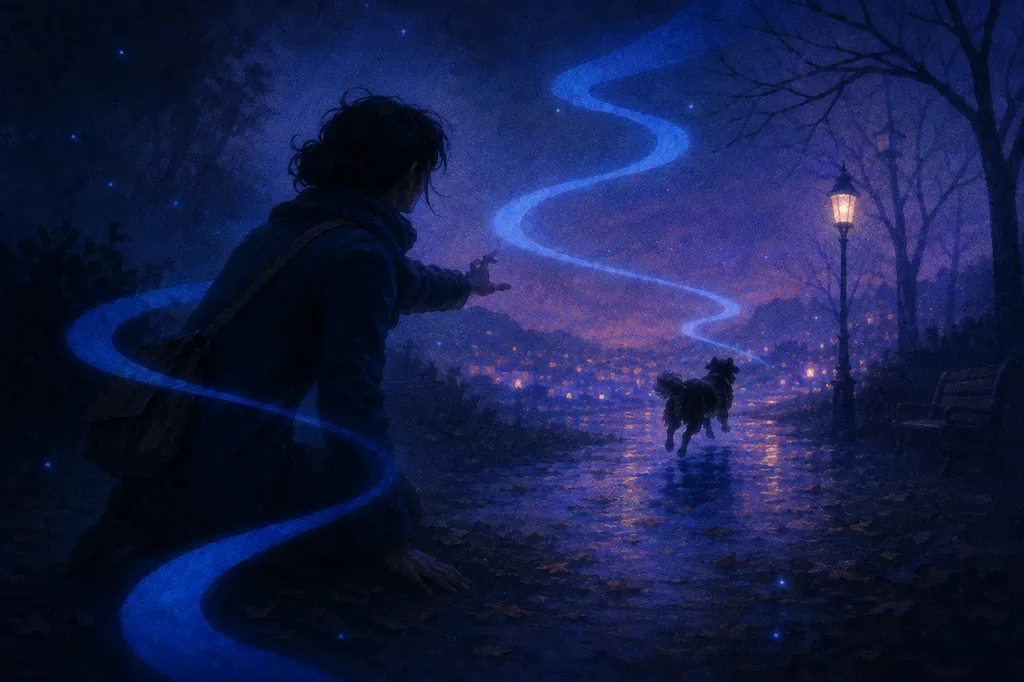
General Meaning
A dream about a lost dog often points to a disconnection from your own intuition, loyalty, or a sense of unconditional companionship. This experience in a dream can symbolize a search for something fundamental you feel is missing in your life, whether it's a relationship, a personal value, or a part of your own identity.
Your Lost Dog Dream Is Trying to Tell You Something...
Reveal your dream's meaning using the power of AI
Disconnected Intuition
Dogs in dreams frequently represent instinct, primal awareness, and gut feelings. A lost dog could therefore symbolize a feeling that you are out of touch with this internal guidance system. You might be consciously or unconsciously ignoring your inner voice, leading to a sense of confusion or uncertainty about which path to take in your waking life. The dream highlights a search for this lost compass.
Loss of Loyalty or Friendship
As powerful symbols of loyalty, companionship, and unconditional love, dogs often reflect the state of our most trusted relationships. Dreaming of a lost dog might stem from anxieties about a close friendship or partnership. It could point to a fear of abandonment, a feeling that a bond is weakening, or a sense of betrayal. It may also represent a loss of loyalty to your own core values or principles.
Neglected Aspects of Self
A pet dog is a responsibility that requires care and attention. In this context, a lost dog can represent a neglected part of yourself—a passion, a talent, a project, or a fundamental need that you have failed to nurture. The dream may be bringing feelings of guilt or regret to the surface, urging you to reclaim and care for these abandoned aspects of your own being.
Symbolic Intersection
To dream of a dog alone often evokes feelings of protection, friendship, and instinctual knowing. The dog is a steadfast companion, a symbol of reliability and unconditional acceptance. However, the experience of it being lost profoundly transforms this symbol. The dream is no longer about the presence of these qualities but about their conspicuous and distressing absence.
The combination of "lost" with "dog" pinpoints a specific kind of inner turmoil. It suggests that the very things you rely on for guidance and comfort—your intuition, your closest bonds, your loyalty to yourself—feel misplaced, inaccessible, or gone. The dream’s emotional weight comes from this inversion; the source of security has become the source of anxiety. It signifies a search not for something new, but for something essential and familiar that has vanished, leaving you feeling vulnerable, disoriented, and alone in your own inner landscape. This dream often marks a period where you are actively seeking to reconnect with your most fundamental, guiding principles.
Want to know more about this dream?
Understand what this dream really means for you, in the unique context of your life and personality. Record all the details of your dream, unlock personalized AI analysis, track your dreams over time, and much more inside the Mirror app.
Dive Deeper with the AppSpecific Considerations
Take into account the specific details of your unique dream.
Narrative
What was your role in the dream's story? Were you frantically searching for the lost dog, or did you passively realize it was gone? An active, desperate search often suggests a conscious and urgent effort in your waking life to reconnect with what the dog symbolizes. A passive realization, on the other hand, might indicate a dawning awareness of a disconnect you hadn’t previously acknowledged.
People
Who, if anyone, was with you? Were you searching alone, or were others helping you? Searching alone can point to a deeply personal and internal struggle. If others were present and helpful, it might represent your real-life support system or the parts of your psyche that are ready to assist in this inner quest. If others were indifferent or unhelpful, it could reflect feelings of being unsupported in your current challenges.
Places
Where did you lose the dog, or where were you searching? Losing a dog at home could relate to your sense of self, family dynamics, or inner security. If the dog was lost in a dark forest or an unfamiliar city, it might symbolize feeling lost in a new phase of life, a complex emotional state, or an unknown future. The environment of the search often mirrors the emotional landscape of your waking life.
Emotions
What was the primary emotion you felt in the dream? Did you feel panic, profound grief, guilt, or a strange sense of calm? Panic and grief are common and highlight the immense value you place on what the dog represents. Guilt could suggest you feel responsible for neglecting an important relationship or a part of yourself. A feeling of calm might indicate a subconscious acceptance of a necessary transition or letting go.
Other Details
Were there any other notable details? Was the lost dog your own current or childhood pet, or was it a stranger? Dreaming of your own pet makes the dream intensely personal, tying it directly to your memories and attachments. A strange dog might represent a more universal or unrecognized aspect of your own instincts. The dog's breed, size, or color could also add further layers of symbolic meaning.
Psychological Meaning
Explore your dream from various psychological perspectives.
Jungian Perspective
From a Jungian viewpoint, the dog can be seen as an archetype of the 'instinctual self' or a psychopomp—a guide between the conscious and unconscious realms. A lost dog dream could signify a critical disconnection from this instinctual guide. You may have over-relied on logic and reason, causing you to lose touch with the natural, intuitive wisdom of your psyche. This leaves your conscious ego feeling disoriented and without its trusted companion on the journey toward wholeness, or what Jung termed individuation.
Freudian Perspective
A Freudian interpretation might view the lost dog as a symbol of repressed instinctual drives (the Id), particularly those related to companionship, protection, or primal urges. The anxiety experienced in the dream could reflect a fear of losing control over these impulses. Alternatively, the dog could be a stand-in for a primary attachment figure, and the dream of it being lost could be a screen memory, re-enacting unresolved feelings of separation or loss from early childhood.
Adlerian Perspective
Adlerian psychology emphasizes social connection, belonging, and the drive for significance. In this context, a lost dog could symbolize a perceived threat to your sense of social security or belonging. The dream might highlight deep-seated insecurities about your place within your family, community, or social circle. The search for the dog could then represent your fundamental human striving to restore that vital sense of connection and companionship.
Gestalt Perspective
Gestalt therapy proposes that every element of a dream represents a part of the dreamer's self. The lost dog is not separate from you; it is you. More specifically, it is a disowned or projected part of your personality that you feel disconnected from. The dream invites you to reclaim the qualities you associate with the dog—perhaps your loyalty, playfulness, unconditional love, or protective nature—that you have neglected or feel are missing from your current experience of self. The feeling of loss is the feeling of inner fragmentation.
Cognitive Perspective
From a cognitive perspective, dreams are often a form of emotional regulation and problem-solving, a continuation of waking thoughts. A lost dog dream could be your mind's way of processing real-world anxieties about responsibility, loss, or the stability of your relationships. Your brain may be running a simulation to work through the emotional and logical steps of dealing with a significant loss or a breakdown in a trusted support system, helping you prepare for or cope with such feelings.
Symbolic Meaning
Reflect on symbolic parallels in mythology.
Anubis, the Jackal-Headed Guide
In ancient Egyptian mythology, the jackal-god Anubis was the guardian of the dead, responsible for guiding souls through the underworld (Duat) to the scales of judgment. Canids were seen as psychopomps, beings who could travel between the world of the living and the world of the spirit. A lost dog dream can tap into this ancient archetype of the missing guide. It suggests you may feel you are navigating a difficult life transition, a period of grief, or a "dark night of the soul" without your spiritual or instinctual compass, leaving you feeling vulnerable and disoriented in an unknown territory.
Reflection for the dreamer: This myth invites you to see your dream as more than just a missing pet; it may be about a profound search for guidance and meaning during a confusing time. How are you currently navigating the "underworlds" of your own life—the challenges, griefs, or unknowns? What form of inner guide are you seeking to find?
The Hounds of Actaeon
In Greek mythology, Actaeon was a hunter who stumbled upon the goddess Artemis bathing in the woods. Enraged, she transformed him into a stag. His own loyal hunting hounds, a symbol of his skill and power, no longer recognized their master. Driven by their primal instinct, they hunted and killed him. This myth explores themes of boundaries, perception, and how our own instincts and loyalties can turn against us when we are no longer recognizable to ourselves.
Reflection for the dreamer: A lost dog dream could reflect a fear that your own instincts or loyalties have become misdirected or no longer serve your true self. Is there a situation where your gut feelings seem confused or unreliable? This dream may ask you to reflect on whether your own "hounds"—your passions, ambitions, or core principles—still recognize you and align with your authentic path.
Spiritual Meaning
How different spiritualities view this dream.
Biblical
In biblical contexts, dogs can symbolize faithfulness and guardianship. A lost dog from this perspective could represent a test of faith, a period where you feel distant from divine guidance or protection. The frantic search for the dog can be seen as a metaphor for the soul's yearning to return to its spiritual path, to find its way back to a sense of security and purpose rooted in faith.
Islamic
In some Islamic traditions, dogs are recognized for their loyalty and protective qualities, especially as guard animals. A dream of a lost dog could symbolize a loss of spiritual protection from negative influences or a warning to be more discerning about your companions and the boundaries you set. It might serve as a call for a purification of intentions and a re-evaluation of the relationships that impact your spiritual well-being.
Buddhism
Within Tibetan Buddhism, dogs are often viewed as beings who are close to the human realm, representing our deep-seated attachments and worldly desires. A lost dog dream could be interpreted as an opportunity to reflect on the nature of attachment and impermanence. The grief felt in the dream highlights the suffering (dukkha) that arises from clinging to things that are, by nature, transient. The dream may gently guide you toward a path of non-attachment and inner freedom.
Hinduism
In Hinduism, dogs are sacred to the deity Bhairava, a fierce manifestation of Shiva, who is often depicted with a dog as his vahana (vehicle). Dogs are revered as guardians of the divine and symbols of dharma (righteous duty). A lost dog dream could signify a feeling of being spiritually unprotected or having lost your connection to your personal dharma. The dream may be prompting an inner search for moral and spiritual realignment, urging you to find your righteous path once more.
Waking Life Reflection
Connect your dream to your waking life.
The insights from a lost dog dream can be integrated into your waking life through conscious reflection. These questions are designed to help you connect the dream's symbolism to your current experiences.
• In what area of your life do you feel a lack of guidance or intuition? How can you create quiet moments to practice listening to your inner voice more closely?
• Which relationships or friendships are currently causing you anxiety? Is there a connection you feel is fading that might benefit from your attention or honest communication?
• What personal talents, passions, or needs have you been neglecting? What is one small, manageable step you can take this week to nurture that part of yourself again?
• Reflect on your definition of loyalty. Do you feel you have been disloyal to your own values recently, or are you grappling with a fear of disloyalty from others?
• Consider the feeling of searching in the dream. What are you actively searching for in your waking life—is it security, connection, purpose, or a sense of belonging?
Explore the Core Symbols
Explore the Dream Encyclopedia
Dive into the encyclopedia to learn more about dreams.
Interpretation Guide
How to Interpret Your Dreams: A Step-by-Step Guide
Evidence-based psychological techniques to decode dream symbols, recurring motifs, and emotional narratives.
Read Guide →
Journaling Habits
How to Start a Dream Journal: Complete Beginner Guide
Proven morning rituals to eliminate grogginess, capture vivid details, and organize your subconscious reflections.
Read Guide →
Lucid Dreaming
How to Lucid Dream: The Complete Guide for Beginners
Step-by-step MILD and WBTB methods to achieve conscious awareness and direct your dreamscape safely.
Read Guide →
Jungian Psychology
Carl Jung's Dream Interpretation: Theory, Method & Symbols
How Jungian depth psychology reveals the shadow self, collective unconscious, and universal archetypes.
Read Guide →
Psychoanalysis
Freud vs. Jung on Dreams: Key Differences Explained
Understanding the contrast between Freud's wish-fulfillment model and Jung's holistic compensation theory.
Read Guide →
AI & Neuroscience
Can AI Interpret Dreams? Machine Learning in Dream Analysis
How natural language processing and neural networks map subconscious symbolism against clinical dream models.
Read Guide →