Dead Lizard Dream Meaning & Interpretation
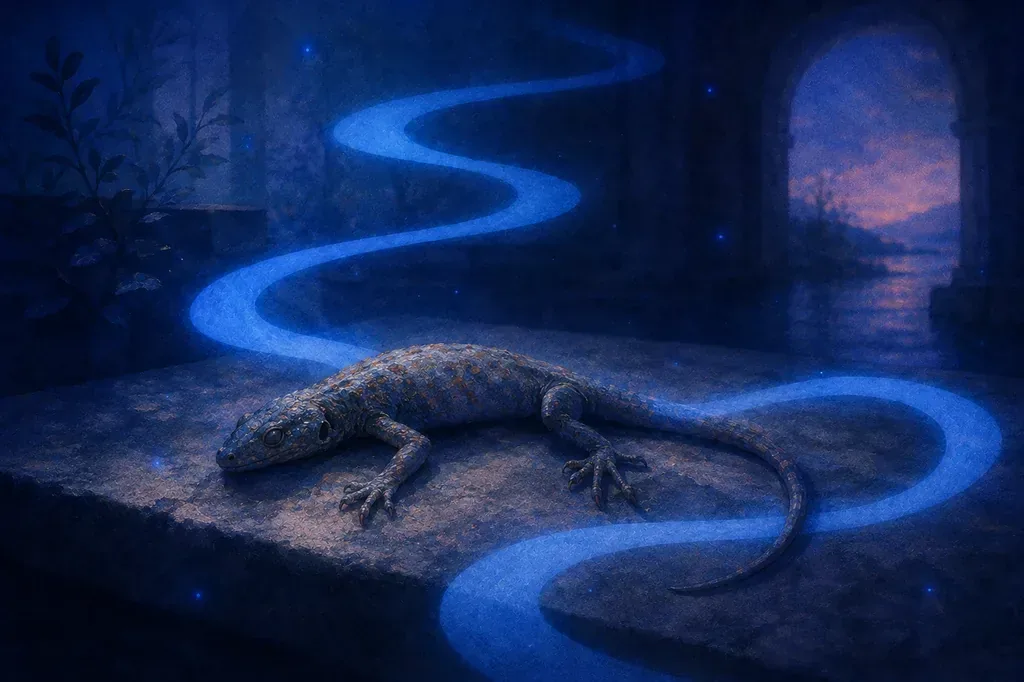
General Meaning
A dream featuring a dead lizard often points to themes of transformation, instinct, and resilience that have been interrupted or concluded. This symbol can suggest a part of you has ceased to grow, an instinct has been ignored, or a cycle of renewal has come to an end.
Your Dream Is Trying to Tell You Something…
Reveal your dream's meaning using the power of AI
Stagnated Personal Growth
A lizard is a powerful symbol of adaptation and regeneration, known for shedding its skin to grow. A dead lizard may symbolize a feeling of being stuck, suggesting that a process of personal development or transformation in your life has been halted, either by external circumstances or internal resistance.
Suppressed Instincts
Lizards are deeply connected to primal instincts and survival, often linked to the “reptilian brain” that governs our most basic responses. Seeing a dead lizard could indicate a disconnection from your own intuition or gut feelings, suggesting you might be ignoring vital survival signals in favor of logic or social pressure.
Loss of Resilience
The ability of some lizards to regrow their tails makes them a symbol of resilience and recovery from adversity. A dream of a dead lizard might reflect a diminished capacity to bounce back from a setback, a loss of hope, or a feeling that you have exhausted your resources for recovery after a difficult experience.
Symbolic Intersection
The core symbolism of the lizard is intrinsically tied to life, adaptation, and primal energy. It represents the ability to survive in harsh environments, to shed old layers for new growth, and to regenerate what has been lost. It embodies a dynamic, life-affirming force that is deeply connected to sun, warmth, and vitality.
However, the addition of the state of being “dead” profoundly inverts this meaning. A dead lizard is no longer a symbol of adaptation but of its failure. It signifies an end to regeneration, a silencing of instinct, and a cooling of vitality. The dream’s focus shifts from the potential for growth to the reality of its cessation. This combination creates a powerful symbol not of a challenge to be overcome, but of something vital that has already been lost or suppressed, inviting you to investigate what part of your adaptive, instinctual self is no longer active in your waking life.
Want to know more about this dream?
Understand what this dream really means for you, in the unique context of your life and personality. Record all the details of your dream, unlock personalized AI analysis, track your dreams over time, and much more inside the Mirror app.
Dive Deeper with the AppSpecific Considerations
Take into account the specific details of your unique dream.
Narrative
Where did the dead lizard appear in the dream’s story? Was it something you stumbled upon, something you caused, or something presented to you? Finding it unexpectedly might point to a sudden and surprising realization of stagnation. If you were responsible for its death, it could reflect a conscious or unconscious decision to suppress an instinct or end a phase of growth.
People
Were other people present when you saw the dead lizard? Their reactions can be revealing. If others were indifferent, it might suggest you feel your inner struggles are unnoticed by those around you. If someone else pointed it out, perhaps you are receiving signals from others that a part of you has become dormant.
Places
In what location did you find the dead lizard? A dead lizard in your home could relate to a loss of vitality in your personal or family life. Finding one in your workplace might point to stagnation in your career or a loss of creative instinct in your professional endeavors. A natural setting could connect to a broader disconnection from your own primal nature.
Emotions
What was your primary feeling upon seeing the dead lizard? Did you feel sadness, disgust, relief, or indifference? Sadness could indicate a genuine mourning for a lost part of yourself. Disgust might suggest a rejection of your own primal instincts. Relief could mean you are glad to be free of a certain survival-driven behavior that no longer serves you.
Other Details
Were there any other prominent symbols, colors, or sounds? A dead lizard found in a dark or cold place would amplify the themes of lost vitality and energy. If it was in a bright, sunny spot, it could create a poignant contrast, suggesting a loss of life amidst potential and opportunity.
Psychological Meaning
Explore your dream from various psychological perspectives.
Jungian Perspective
From a Jungian viewpoint, the lizard represents the cold-blooded, primal, and instinctual aspects of the psyche, often connected to the collective unconscious. A dead lizard could symbolize a severed connection to this fundamental part of the Self. It may represent a “shadow” aspect—an instinct or desire you have repressed so thoroughly that it has lost its vitality. This dream could be a call to examine which parts of your instinctual nature you have disowned and why.
Freudian Perspective
In Freudian analysis, long-bodied creatures like lizards can sometimes be interpreted as phallic symbols, representing libido, potency, and life force. A dead lizard, therefore, might symbolize anxieties related to a loss of vitality, creative energy, or sexual drive. It could point toward feelings of powerlessness or a psychological “death” of a particular ambition or desire that was once a primary driver for you.
Adlerian Perspective
Adlerian psychology focuses on the individual’s striving for significance and belonging within a social context. In this light, a dead lizard could represent a profound sense of discouragement or a feeling of failure in adapting to life’s challenges. It may symbolize a “giving up” on a particular goal or a belief that you are no longer capable of overcoming an obstacle, reflecting a loss of your “striving for superiority.”
Gestalt Perspective
Gestalt therapy views every element of a dream as a projection of the dreamer’s own self. The dead lizard would be seen as a disowned part of you. The dream is not about an external event but about an internal state. It invites you to engage with this “dead” aspect. You might ask yourself: “What part of me is this dead lizard? What is my ‘lizard’ nature, and why do I perceive it as lifeless right now?”
Cognitive Perspective
From a cognitive perspective, a dream is a reflection of your thought patterns and core beliefs. A dead lizard could be a powerful metaphor for a cognitive schema or coping mechanism that has become outdated and is no longer functional. It may represent a rigid, automatic behavior that was once useful for survival but now hinders your growth, a “dead” habit of thought that needs to be acknowledged and replaced.
Symbolic Meaning
Reflect on symbolic parallels in mythology.
The Interrupted Cycle of Renewal
Symbolism of Skin-Shedding: Lizards are revered in many cultures as masters of regeneration due to their ability to shed their skin. This act is a powerful metaphor for letting go of the past, healing, and personal transformation. A dead lizard powerfully disrupts this symbolism. It represents a renewal process that has been cut short or a failure to shed an old identity, leaving you stuck in a previous version of yourself.
Reflection for the dreamer: This symbol may ask you to reflect on where in your life a cycle of growth has been broken. Are you clinging to an old “skin”—a job, a relationship, a belief system—that you have outgrown? The dream could be highlighting the psychic cost of refusing to move forward.
The Silence of the Reptilian Brain
The Instinctual Self: In modern symbolism, the lizard is often connected to the “reptilian brain,” the oldest part of our brain responsible for core survival instincts like fight, flight, and freeze. It represents our most fundamental, non-verbal wisdom. A dead lizard can therefore symbolize a dangerous disconnection from your own intuition and gut feelings. It suggests that your logical mind may have completely overridden your primal instincts.
Reflection for the dreamer: Consider if you have been ignoring your intuition recently. Have you rationalized a situation that your gut told you was wrong? This dream could be a warning that by silencing your inner “lizard,” you may be overlooking essential information for your well-being and survival.
Spiritual Meaning
How different spiritualities view this dream.
Biblical
In a Biblical context, reptiles are sometimes associated with uncleanliness or temptation (Leviticus 11:29-30). From this perspective, a dream of a dead lizard could be interpreted positively, symbolizing the successful overcoming of a temptation, the defeat of a negative influence, or the purification of a part of your life that was considered “unclean.”
Islamic
In some Islamic interpretations, lizards (specifically geckos) can be viewed negatively. Consequently, dreaming of a dead lizard might be seen as a positive sign, representing the end of a minor harm, the removal of a persistent annoyance, or protection from a hidden enemy or negative gossip.
Buddhism
Buddhism emphasizes the concept of Anicca, or impermanence. A dead lizard in a dream would be a stark reminder of this universal truth—that all things, including our own states of being, are transient. It could be a call to practice mindfulness and non-attachment, accepting the natural cycles of life and death without resistance and cultivating compassion for all beings.
Hinduism
In Hindu traditions, lizards can be omens, and their movements are sometimes interpreted by astrologers. A dead lizard could be seen as an inauspicious sign, potentially signifying a blockage in the flow of life energy (prana) or a warning to be cautious in your endeavors. It may suggest a need for a spiritual cleansing or a re-evaluation of your current path.
Waking Life Reflection
Connect your dream to your waking life.
Reflecting on your dream can help integrate its potential insights. Consider these questions to explore the meaning of the dead lizard in your life:
• In what area of my life do I feel my growth has stopped or become stagnant?
• Is there a part of my instinctual or “wild” nature that I have recently suppressed or ignored?
• Am I feeling a loss of resilience or an inability to bounce back from a recent challenge?
• What old “skin” or identity am I having trouble shedding?
• Does this dream reflect a conscious choice to end something, or does it feel like an involuntary loss of vitality?
Explore Core Symbols
Explore the Dream Encyclopedia
Dive into the encyclopedia to learn more about dreams.
How to Interpret Your Dreams: A Step-by-Step Guide
Evidence-based psychological techniques to decode dream symbols, recurring motifs, and emotional narratives.
How to Start a Dream Journal: Complete Beginner Guide
Proven morning rituals to eliminate grogginess, capture vivid details, and organize your subconscious reflections.
How to Lucid Dream: The Complete Guide for Beginners
Step-by-step MILD and WBTB methods to achieve conscious awareness and direct your dreamscape safely.
Carl Jung's Dream Interpretation: Theory, Method & Symbols
How Jungian depth psychology reveals the shadow self, collective unconscious, and universal archetypes.
Freud vs. Jung on Dreams: Key Differences Explained
Understanding the contrast between Freud's wish-fulfillment model and Jung's holistic compensation theory.
Can AI Interpret Dreams? Machine Learning in Dream Analysis
How natural language processing and neural networks map subconscious symbolism against clinical dream models.